Catherine Petretti
Astronomy & Astrophysics Ph.D. Candidate at Harvard University.
Astronomy & Astrophysics Ph.D. Candidate at Harvard University.
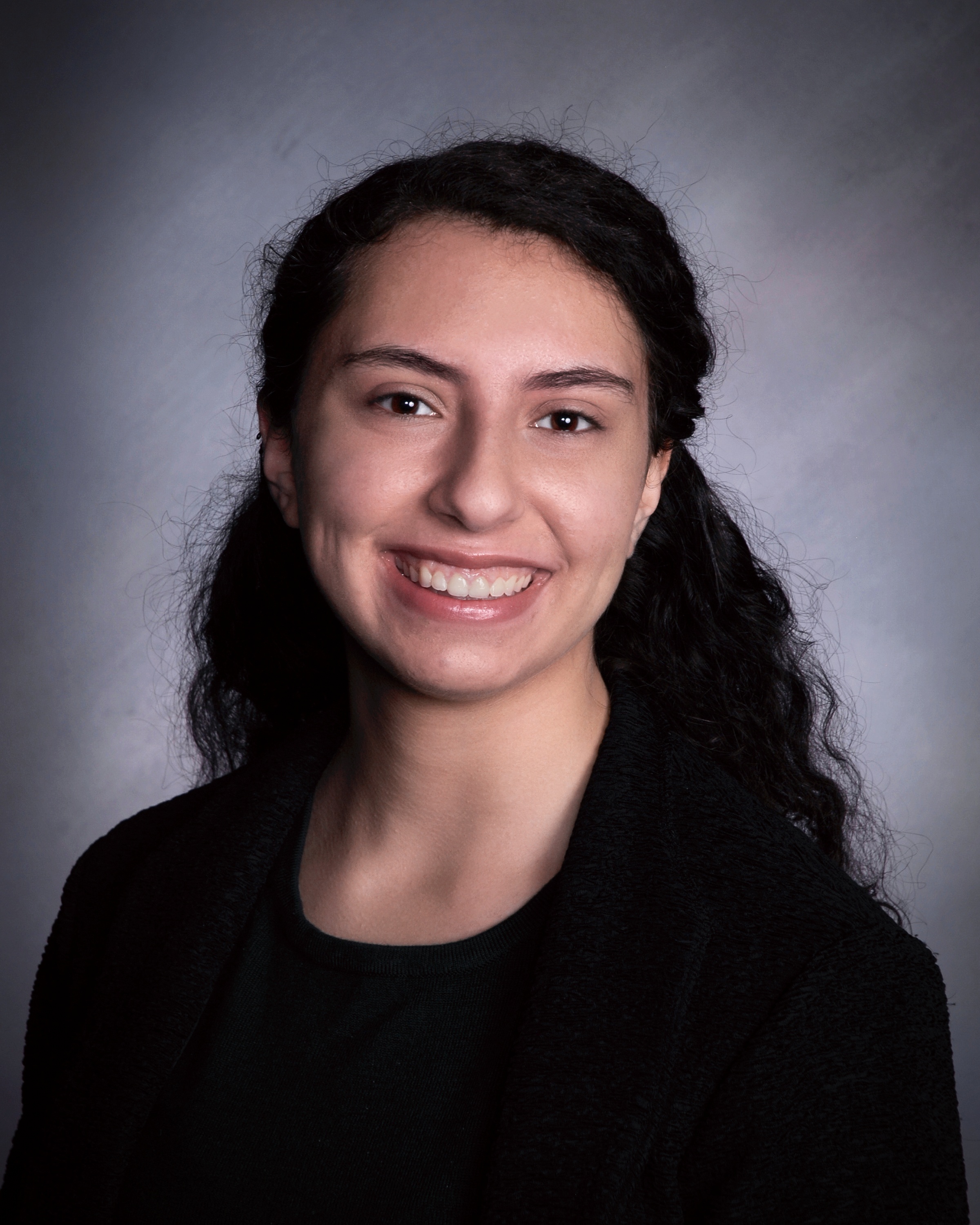
I received my Bachelor of Science from Villanova University in Astronomy & Astrophysics in 2022. I am currently completing my Ph.D. at Harvard University with expected graduation in May 2027. I work at the intersection of theory and observation. I analyze current data from the Cosmic Microwave Background and galaxy surveys— as well as simulate measurements from upcoming missions—to see if we will be able to detect different non-standard cosmology models in the coming decades.
Inflation is a scenario in which the universe underwent a rapid exponential expansion ~10-36 seconds after the Big Bang. Our most compelling evidence for inflation comes from anisotropies in the temperature and polarization of the Cosmic Microwave Background (CMB). However, these measurements do not offer enough precision to probe inflation directly. Furthermore, there are many different proposed models of inflation that are consistent with observations, and without more precise measurements, we cannot distinguish between these models. However, there are a number of cosmological experiments that will begin observations within the next decade— such as Simons Observatory, LiteBIRD, LSST, and Euclid—that will aim to measure the CMB with uprecedented precision. I study different models of inflation and determine their expected observational signals. I use data from the CMB and large-scale structure (LSS) to constrain these signals, and I forecast observations of upcoming CMB and LSS missions, in order to better understand the physical processes that may have taken place during inflation.
Standard cosmology predicts that the universe is flat (zero curvature) and infinite in all directions. However, it is also possible that the universe can wrap around itself or has some non-zero curvature, an idea called cosmic topology. I am involved in the COMPACT Collaboration, led by Glenn D. Starkman, which explores cosmic topology in order to explain discrepancies between CMB observations and the standard cosmological model. I am mainly involved in the study of positively curved universes. I formulate the expected observational signatures from such topologies and compare how we can distinguish between different topologies in the CMB.